



I found LibriVox Audio Books most useful when I wanted a spoken book without turning the search into a shopping decision. It is a free Books & Reference app from BookDesign, built around a very large collection of recordings made available through LibriVox. The headline is easy to understand, but the real question is whether that collection suits the way you listen. In my experience, it works best for public-domain classics, older nonfiction, language practice, and relaxed listening where the narrator matters as much as the text.
The app has a 4.6 average from around 68 thousand ratings and has passed 5 million installs, so it is clearly not an obscure experiment. I can also see why it appeals to people who want an audiobook library without a subscription. At the same time, it is not a universal replacement for modern commercial audiobook services. The catalog’s character, the unevenness of volunteer recordings, and the age of many books all shape the experience.
How the listening experience feels in everyday use
What I expect when opening a book
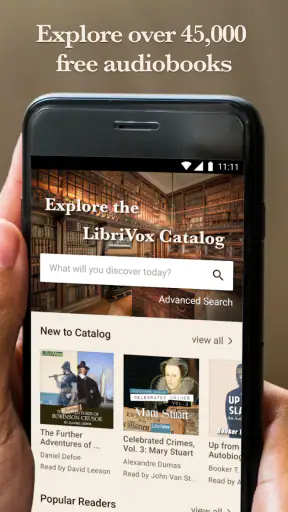
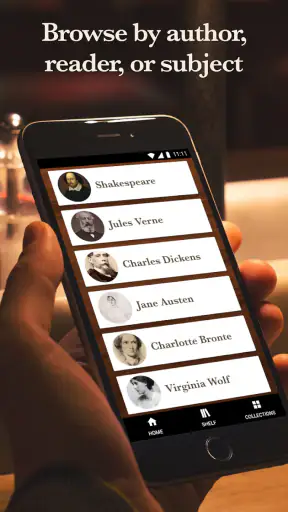
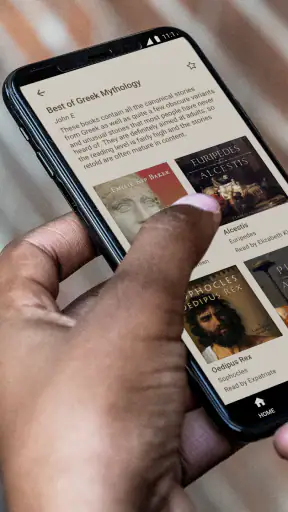
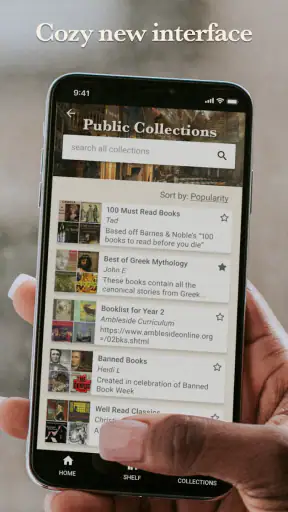
My first impression is that the app’s value comes from discovery rather than luxury presentation. You are not simply buying one polished new release at a time. You are exploring a broad archive of spoken books, and that changes how I use it. I tend to browse by author, title, or subject, then listen to a sample of the available recording before committing to a long work.
That small listening check is important. A book can be excellent while a particular reading does not suit my ears. Some narrators are calm and easy to follow, while others have a stronger accent, a more theatrical delivery, or recording qualities that make long sessions tiring. I would not treat the first result as automatically the best version. When several recordings appear, comparing them briefly is one of the most useful habits I developed with the app.
The collection is especially attractive if your reading list includes well-known classics, poetry, philosophy, history, or older adventure novels. It is less compelling if you mainly want current bestsellers, recent celebrity memoirs, or heavily produced fiction with multiple actors and sound design. In that situation, a commercial audiobook platform is usually a better match, even if it costs more.
A realistic daily scenario
For me, the strongest use case is a routine that leaves my hands busy but my attention available. I might choose a short story before a walk, start a classic novel while doing household chores, and return to the same title during a quiet commute. The app turns those small periods into reading time without requiring me to carry a physical book or stare at a screen.
I recommend choosing the book before the activity begins rather than browsing while walking or driving. Audio apps are most helpful when the setup is finished in advance. I also prefer starting with a work divided into manageable listening sessions instead of assuming I will remember every detail after a long uninterrupted play. Older books often have dense names, unfamiliar places, or elaborate sentences, and pausing to revisit a passage is part of the experience.
That leads to a less obvious strength: the app can make difficult books feel more approachable. Listening gives the prose a rhythm that is easy to miss on the page. It does not replace reading for close study, but it can be an effective first pass through a classic before returning to selected chapters in print or an e-reader.
Speed, controls, and the cost of a large library
I would describe the general experience as focused rather than overloaded. The app’s purpose is clear: find an audio book and listen. That makes it easier to settle into a routine than an app packed with unrelated media. Still, the perceived speed of getting started depends on how carefully you search. A large archive can save money while taking more time to navigate, especially when several versions of a title compete for attention.
My practical advice is to search with the full author and title when possible, then inspect the recording details before pressing play. If you are studying a particular edition or translation, do not assume that every result represents the same text. The title may be familiar, but the narrator and source can change the way the work feels.
The free price is a major advantage, although in-app purchases ranging from under a dollar to ten dollars per item are part of the app’s commercial model. I would not regard those purchases as necessary for understanding its core appeal, but I would still check what an optional item does before paying. Someone choosing the app specifically to avoid audiobook spending should be comfortable using the free portion first.
What happens during heavier listening
Long listening sessions reveal more than a quick test. A short story may seem perfect, while a novel lasting many hours exposes whether the narration keeps my attention, whether I can recover my place easily, and whether the recording quality remains comfortable. I found that the biggest strain is usually not the app itself but the source material: older recordings can have inconsistent volume, background noise, or a delivery style that becomes distracting over time.
For heavy use, I would prepare a small rotation instead of relying on one enormous book. Keeping a short work, a familiar title, and a more demanding novel available gives me an easy fallback when concentration drops. This is also a useful way to judge narrators. A voice that works beautifully for poetry may not be ideal for a long mystery, and a dramatic reading may be enjoyable in short portions but exhausting during chores.
Another practical trade-off is attention. Audio books let me multitask, but they do not make every task compatible with serious reading. I would avoid using a complicated narrative while working with numbers or following detailed instructions. When I need to remember arguments, names, or plot turns, I listen during a quiet walk and pause whenever my attention drifts. That is more effective than letting the recording continue while I miss important sections.
Stability and recovering your place
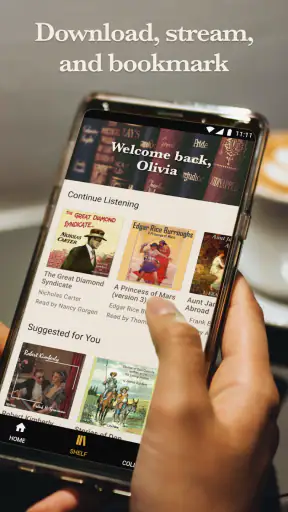
An audio-book app earns trust when returning to a title feels simple. In normal use, I want to stop without anxiety, reopen the app later, and continue from roughly where I left off. I also want the catalog and playback areas to feel separate enough that browsing does not make me lose the current book. That recovery habit matters more to me than decorative design because most listening happens in fragments.
I would still treat any long recording as something worth managing carefully. Before leaving home for an extended session, I prefer opening the title and confirming that the correct recording is ready. If I am switching between several books, I make a mental note of the chapter or section rather than trusting memory alone. This is not glamorous advice, but it prevents the common frustration of returning to a long novel and spending several minutes trying to identify the last scene I heard.
Reliability also depends on the recording itself. A technically imperfect volunteer performance is not necessarily unusable, but it can become a problem during quiet listening or in a noisy environment. Headphones may reveal flaws that phone speakers hide, while a speaker can make a soft recording easier to follow in a room. I judge each title independently instead of assuming that the app’s entire catalog has one consistent production standard.
Who will enjoy it, and who should skip it
I would recommend this app to someone who enjoys classic literature, wants free access to spoken books, or is willing to explore different narrators. It is also a good companion for students approaching older works, provided they use it alongside the text when exact quotations or close interpretation matter. People learning English may appreciate hearing sentence rhythm and pronunciation, although the age and style of a book can make the language less conversational than modern speech.
I would be more cautious recommending it to a listener who expects every title to sound like a premium studio production. If polished narration, current releases, exclusive content, or a uniform interface are your priorities, a paid service will probably feel more dependable. The same applies if you want a specific contemporary title and do not enjoy browsing around the edges of a catalog.
It is also not my first choice for children. The content rating is Teen, and the library includes material with mature themes, old-fashioned attitudes, and language that may need context. A parent choosing recordings for a younger listener should select each book personally instead of treating the whole collection as family-safe background audio.
Device limits and sensible preparation
The app supports devices running Android 7.0 or later, which makes it accessible on a broad range of Android hardware. That does not mean every older phone will feel equally comfortable during long sessions. On an aging device, I would keep the listening setup simple, close unrelated apps, and avoid judging the service by a phone already struggling with storage or general responsiveness.
Resource demands are easiest to manage when I use the app for its central task rather than leaving many media-heavy apps active at the same time. A long listening session is usually less demanding than video streaming, but the overall phone experience still depends on the device, its available space, and the way other apps behave. I would not promise identical performance across every handset, especially when moving between older hardware and newer models.
Battery planning is another small but useful consideration. Audio generally lets the screen stay off, which is friendlier to battery life than watching video, but extended playback still belongs in the same category as any other long media session. Before a trip, I start the title early, check that playback is behaving normally, and carry a charging option if the journey is long. That routine matters more than chasing a theoretical performance score.
When a session is interrupted, my recovery approach is straightforward: reopen the same title, verify the chapter, and listen for a few seconds before settling back in. If the position seems unfamiliar, I move back to the last clear scene rather than continuing blindly. With long public-domain works, a little manual orientation is often faster than trying to reconstruct the story later.
How it compares with the usual alternatives
Compared with buying individual audio books, LibriVox Audio Books is much easier on the wallet when your interests center on older works. The trade-off is selection style. A store is designed to sell a specific polished product, while this app feels more like an archive that rewards curiosity. I spend less money, but I also spend more time deciding which recording suits me.
Compared with a subscription service, the difference is even clearer. Subscription platforms usually emphasize recent commercial releases, professional narration, recommendations, and a consistent listening ecosystem. This app’s appeal is the opposite: a wide public-domain focus, volunteer readings, and the chance to discover material that is not being pushed as a current release. Neither approach is automatically better. I would use the subscription service for new fiction and this app for classics or exploratory listening.
Compared with ordinary podcast apps, the advantage here is organization around books rather than episodes. A podcast app can play spoken content, but it is not always the best place to manage a long novel with multiple chapters. On the other hand, podcast apps may feel more familiar for short, regularly updated programs. I choose LibriVox when I want a book-shaped listening experience, not simply something to fill silence.
What the current version means for my recommendation
The current version is 11.0.1, and the app has been available since June 15, 2018. That history gives it the feel of an established tool rather than a brand-new catalog with an uncertain direction. I would still keep expectations practical: maturity does not make every recording equally polished, and a long-running app can retain design choices that newer competitors handle more elegantly.
BookDesign is the developer behind the app, but my decision would rest more on the collection and listening habits than on the developer name. The important test is personal: can I find books I genuinely want, do the available narrators work for me, and can I return to the same title without friction? If the answer is yes, the app earns a regular place on my phone.
My performance verdict
My overall verdict is positive, with a clear condition: treat it as a large, free audio-book archive rather than a premium release platform. The experience feels most efficient when I search deliberately, sample narrators, and choose books that fit the strengths of volunteer recording. It becomes less satisfying when I expect current commercial titles, perfectly uniform sound, or a completely hands-off listening journey.
The best reason to install it is the combination of free access and genuine discovery. I can use it for a classic during a walk, a short story while doing chores, or a difficult book that I want to hear before studying it closely. The main limitation is not a lack of material; it is the need to curate my own experience from that material.
For readers who enjoy public-domain literature and do not mind comparing narrators, I think it is an easy recommendation. For listeners who want the newest releases and studio-level consistency, I would choose a paid audiobook alternative instead. On a compatible Android device, LibriVox Audio Books is a sensible, low-risk way to add spoken books to a daily routine, as long as you value breadth and independence more than polish.


